Today a business website is not just a business card – it is one of the most important ways to win customers and grow the business. When a customer looks for services online, they form their first impression in seconds. If your website looks outdated, loads slowly or can’t be found in search results, the customer moves on.
A high-quality, search-optimised and mobile-friendly website helps your business stand out from competitors, build trust and guide visitors towards getting in touch or making a purchase. But how do you make sure your website really works for your business? In this article, we look at why a business should invest in its website, how it can bring in more customers and what a good website actually means.
A well-designed website makes an impression and brings in customers
The main job of a website is to convince visitors that your business is reliable and competent. That doesn’t just mean a stylish look, but functionality that takes the user’s needs into account:
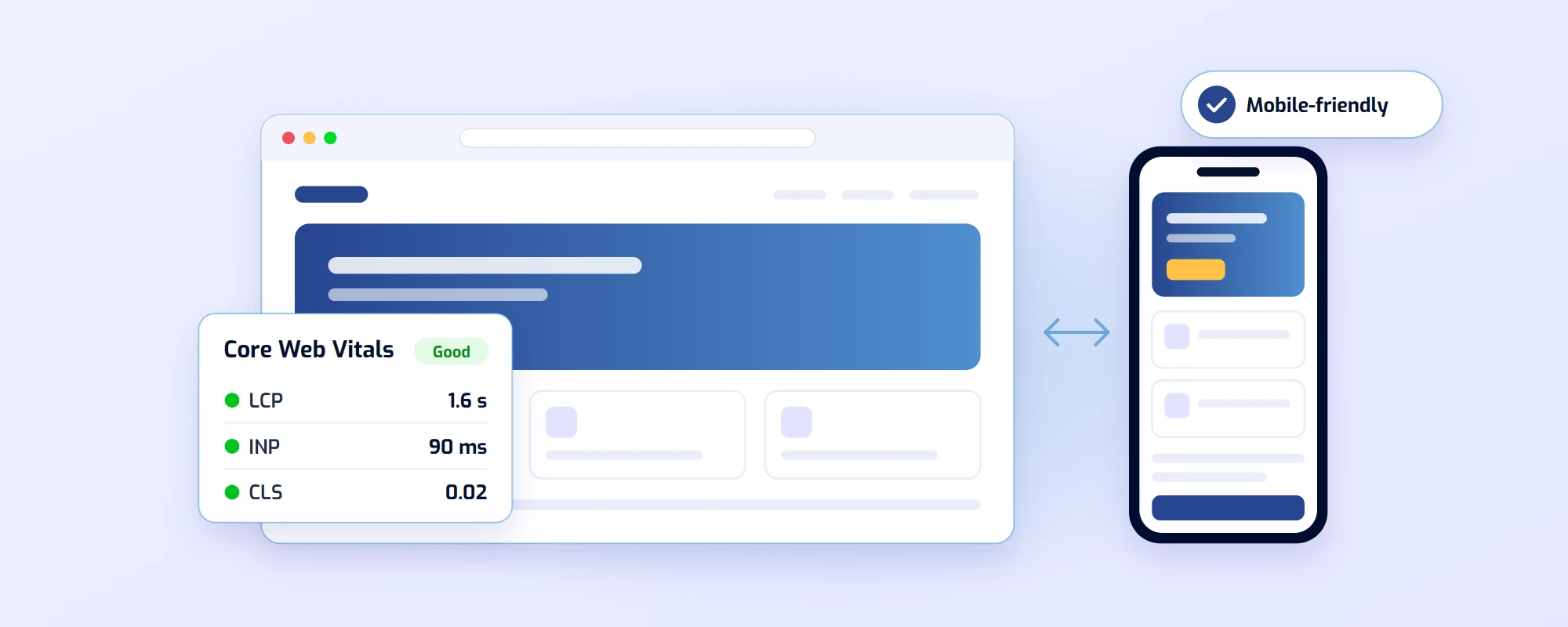
- Speed: Google favours sites that load quickly. According to Google, 53% of mobile visitors leave if a page takes more than 3 seconds to load. Test your site’s speed with Google PageSpeed Insights and optimise it if needed.
- Clear navigation: If customers can’t find what they are looking for in 10 seconds, they will probably leave. Organise the content logically, for example into “Services”, “Contact” and “About us” sections.
- Responsiveness: Most websites are now opened on a phone. If your site doesn’t adapt to phones and tablets, you lose most of your visitors.
One of the biggest mistakes is leaving a site without updates for years. Technology moves fast, and what worked five years ago may no longer meet today’s standards. Slow pages or confusing navigation can make a potential customer close your site and go to a competitor’s.
Responsive design is also critical. More and more customers browse websites on their phones, so the site has to work seamlessly on different devices. If mobile use is awkward, more than half of visitors leave before they have even looked at your services.
Picture this: a customer is looking for a caterer for their wedding. They arrive on your site, but it takes a long time to load, the menus are confusing and on mobile the text overlaps. They close the page and choose a competitor whose site loads quickly and looks good on a phone. An outdated or poorly working site is not just an obstacle, it is a lost opportunity. (Eurostat: e-commerce statistics)
Search engine optimisation (SEO) brings in more customers
Simply having a website is not enough – it has to show up in Google’s search results. Millions of searches are made every day, and search engine optimisation (SEO) is the key to your business being found. If your site doesn’t appear on the first page for search terms like “website for a small business” or “business website cost”, it is practically invisible.
So how does SEO actually work?
- Keywords: Identify the terms your customers use, such as “website design for businesses” or “mobile-friendly website”. Use them in headings, body text and metadata.
- Technical optimisation: Make sure the site loads quickly and is error-free. Google’s Search Console helps you spot problems.
- Content: Provide value, for example blog articles on topics like “How much does a business website cost?” Useful content keeps bringing visitors from search engines long after it is published.
- Mobile-friendliness: Google uses mobile-first indexing, which means the mobile version determines your search rankings. (Google: mobile-first indexing)
Example: a plumbing firm in Tampere optimises its site for the search term “plumbing renovation Tampere”. When the site rises to the top of the results, quote requests come from people looking for the service at that very moment – with no advertising costs.
When search engine optimisation is done right, your website keeps bringing in new customers without you having to keep investing in advertising.
How does a website support your business in practice?
A good website is an active tool that supports the growth of the business. It is not just information: it guides customers towards the action you want them to take:
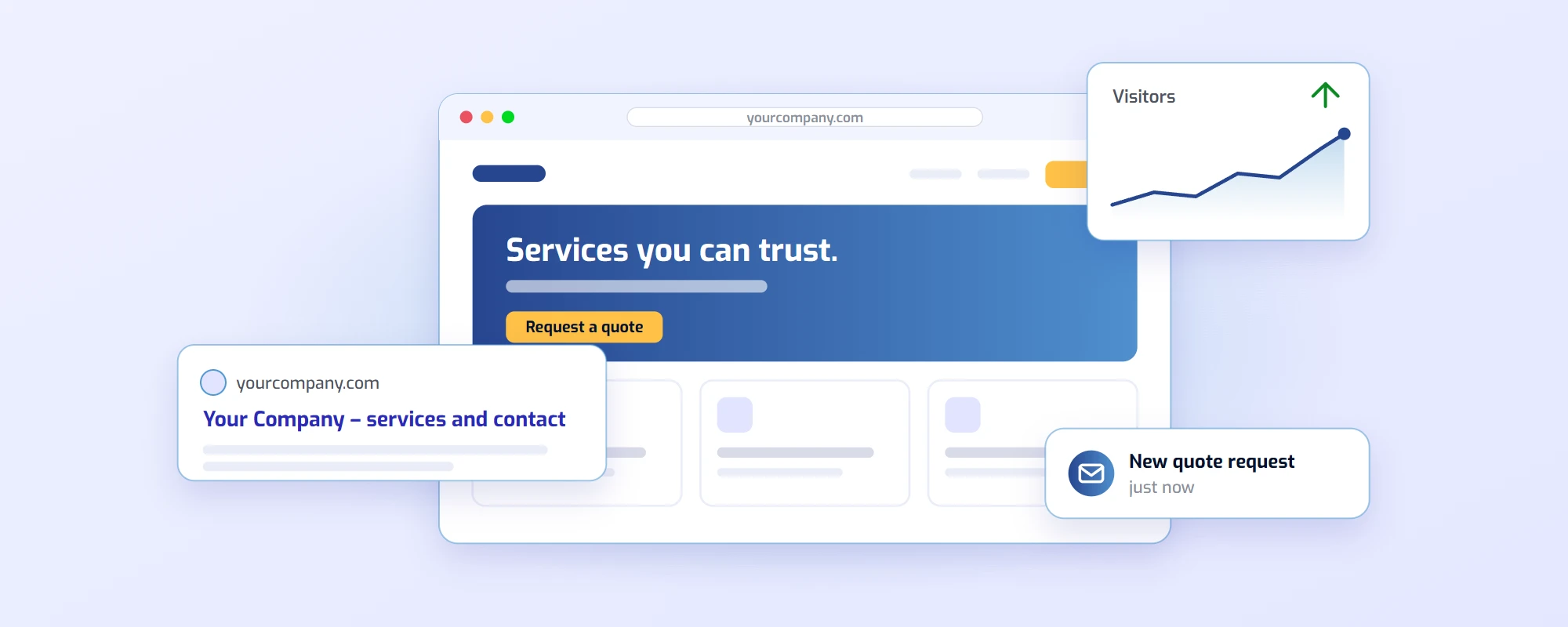
- For service businesses: A clear “Contact us” form and a visible call to action (such as “Request a quote”) can increase enquiries significantly. The fewer fields and clicks it takes to get in touch, the more visitors do it.
- For webstores: A fast and reliable checkout is vital. Shopping carts are often abandoned because of slowness or complexity – optimise the checkout and you reduce abandoned purchases.
- Strengthening the brand: A professional website creates the image of a reliable business. Add customer testimonials or references to build trust.
Imagine a customer looking for IT support. They arrive on the site, see a clear description of the service and click “Book a free consultation” because the process is so easy. Without a working website, they would have called a competitor.
The customer journey on your website and conversion optimisation
Every page should answer the question: “What does the customer want to do next?” A good website guides the visitor’s journey logically:
- Home page: Present your services and lead visitors further, for example “Explore our services”.
- Service page: Give detailed information and a call to action, such as “Order now” or “Read more”.
- Contact: Make the form easy to fill in and add a map if you have premises.
Call-to-action (CTA) buttons really matter. For example, “Contact us today”, “Download the free guide” or “Request a free quote” draw attention exactly where you want it, so place them carefully. One clear call to action per page usually works better than several competing ones.
5 steps to an effective website
Want practical instructions? Here are five steps to building a website that works for your business:
- Define the goal: Is it collecting leads, sales or brand visibility?
- Choose a platform: WordPress or Wix suits many small businesses that have the time, skills and will to build the site themselves.
- Invest in content: Write clear descriptions of your services and optimise them with keywords.
- Test that it works: Check with PageSpeed Insights and on your own phone that the site works on mobile.
- Update regularly: Add new content, such as blog posts or news, to keep the site current.
Summary: an investment that pays for itself
A website is more than just another expense: it is an investment that strengthens your brand, improves the customer experience and brings in new customers. A search-optimised, mobile-friendly and user-centred website is at the heart of digital success.
You probably already know where to start.